Best Loyalty App 2026: Better Than LoyaltyLion?

Kashish Ahuja
•
TL;DR: LoyaltyLion is still a strong, mature loyalty platform in 2026 — but its order-based pricing climbs fast (roughly $199 to $1,650+/month) and many Shopify brands find it heavier than they need. If you want LoyaltyLion-level outcomes with faster setup, a lighter storefront, analytics built in, and a free tier to start, Sway Loyalty is the alternative most scaling brands should shortlist first.
Start for free · Book a 30-min demo
If you run a Shopify brand in 2026, you've probably felt it: ads cost more, conversion is harder to sustain, and "just run a sale" isn't a strategy anymore.
That's why more founders are revisiting a question that used to feel optional: what's the best loyalty app for my store right now — and is it still LoyaltyLion?
This guide is written for that exact moment. I'll give you a practical way to evaluate loyalty platforms in 2026, then rank the best LoyaltyLion alternatives based on what most Shopify brands actually need today: repeat purchases, clean analytics, strong referrals and VIP tiers, fast setup, and zero storefront slowdown.
Why "best loyalty app" matters more in 2026 than it did in 2024–2025
In 2024 and 2025, you could get away with a basic loyalty setup: offer points, add a referral code, slap on a "VIP" badge, and call it retention.
In 2026, that's not enough. Here's the reality most DTC and Shopify brands are operating under:
CAC is still high — and more volatile than it used to be.
Margins are tighter — shipping, returns, packaging, discounts, and creator costs all add up.
Competition is brutal — every niche has 20 "high-quality" brands, not 2.
Attention spans are shorter — customers want immediate, obvious value.
So loyalty can't just be "points." A modern loyalty platform is expected to drive measurable retention: VIP tiers that actually change behavior, referrals that perform like a real channel, segmentation so you can treat high-LTV customers differently from discount-only shoppers, and analytics that tie rewards back to revenue (repeat rate, LTV, AOV lift, reward ROI).
In short: in 2026, the best loyalty app is the one that helps you buy less traffic and earn more repeat revenue — without creating a new operational headache.
Quick take: is LoyaltyLion still worth it in 2026?
LoyaltyLion remains one of the most established loyalty platforms in the Shopify ecosystem. It's typically best suited for:
Established Shopify and Shopify Plus brands
Teams that want a mature platform with deep configuration
Merchants who prioritize brand recognition and a proven track record
Where it excels: strong core loyalty mechanics, a lot of configuration depth, deep Klaviyo and POS integrations, and years of refinement.
The reason brands shop for alternatives is also predictable — and in 2026 it mostly comes down to cost and complexity:
Pricing scales steeply. LoyaltyLion's plans are tied to your monthly order volume and run from around $199/month on the entry tier to roughly $729/month (Advanced) and into four figures — about $1,650/month — on Plus for high-volume stores (LoyaltyLion pricing). For a brand doing ~2,000 orders/month, loyalty alone can become a meaningful line item.
Complexity slows you down. The depth that enterprise teams love can make launch and iteration slower for lean teams.
Performance. Heavier storefront scripts and widgets can affect page speed if they aren't carefully implemented.
Feature gating. VIP tiers and some advanced capabilities sit on higher tiers, so the features you want can pull you into a pricier plan.
If those tradeoffs resonate, it's worth comparing alternatives before you renew.
See how Sway compares — start free
What to look for in a loyalty platform in 2026 (a simple checklist)
Before you pick a tool, get clear on what "good" means for your store.
1) Core loyalty mechanics (non-negotiable). Flexible earning and redemption: points for purchases (with customizable earn rates), points for actions (account creation, social follow, birthday), flexible rewards (% off, fixed amount, free shipping), exclusions (e.g. no points on subscriptions), and expiration rules so you can control point liability.
2) VIP tiers that actually drive repeat purchases. Tiers should feel like milestones customers can chase — Bronze/Silver/Gold (or your own naming), clear entry rules (lifetime spend, order count, points), and perks that matter (multipliers, early access, free shipping, gifts).
3) Performance and SEO. A loyalty widget that slows your storefront is a hidden tax. Look for minimal script bloat, fast widget rendering, accessibility, and no damage to your Core Web Vitals.
4) Migration that doesn't break customer trust. If you're switching from LoyaltyLion, Smile, or Growave, migration should move points cleanly, preserve VIP tiers, avoid customers seeing "0 points" overnight, and minimize downtime.
5) Support and onboarding. You're buying time, not just software. Can you launch in days, not weeks? Is onboarding included? Is migration help available? Do you reach real humans when something breaks?
Best LoyaltyLion alternatives for 2026 (ranked by what most Shopify brands need)
Ranked on value for money, feature coverage (points, tiers, referrals, customization), ease of setup, analytics depth, fit for modern retention, and performance impact. "Best" depends on your store, so each pick includes who it's for — and the tradeoffs.
1) Sway Loyalty — best overall value + performance alternative
The short version: Sway Loyalty is a modern, performance-focused loyalty platform built for quick setup and effective retention — without the features (and pricing) you don't use.
It's the most compelling LoyaltyLion alternative for Shopify brands that want fast setup, clean fundamentals (points + tiers + referrals), and better analytics and segmentation to run smarter retention.
Core features:
Customizable rewards — points for orders, social actions, and engagement, with flexible redemption (% discount, fixed amount, free shipping).
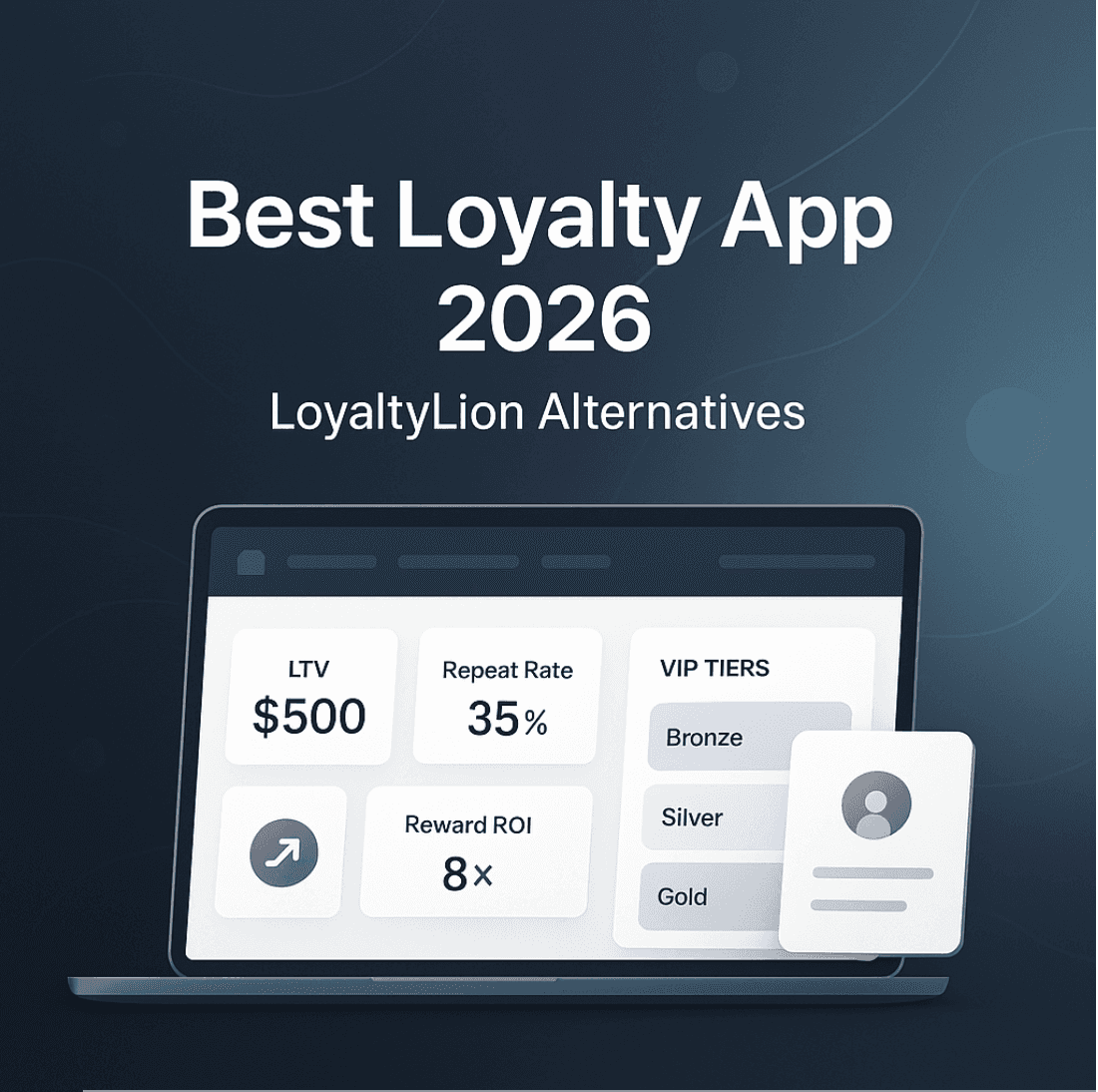
Tiered VIP levels — milestone tiers (Bronze/Silver/Gold, or your own) to motivate repeat purchases.
Branded experience — a fully customizable widget plus an embedded account-page widget.
Advanced analytics — track LTV, repeat purchase rate, and reward ROI without spreadsheets.
Cohort-based segmentation — ready-made templates and cohort recommendations to launch targeted retention plays.
Referrals — built-in referral mechanics for word-of-mouth growth.
Seamless migration — built to move you from LoyaltyLion, Growave, and Smile.
Why brands choose Sway in 2026:
Exceptional performance — SEO-friendly, accessible, and built not to slow the storefront.
Rapid implementation — many merchants go live in under 30 minutes.
Proven growth metrics (as reported by Sway's sources): average revenue increase of 28%, 3.4x repeat purchase rate, and 31% AOV increase.
High value, lower cost — a free tier to start, so you stop paying enterprise pricing for features you don't use.
Real support — onboarding, custom launch plans, and migration help on higher tiers.
Best for: Shopify brands that want LoyaltyLion-level outcomes without the overhead; teams that care about site speed, clean UX, and fast launch; brands that want analytics and cohorts baked in.
Tradeoffs: As with any newer platform, validate the exact integrations your stack needs. Sway already supports Judge.me and Klaviyo — if you rely on a niche tool, confirm compatibility before switching.
Start for free · See pricing · Book a demo
2) Smile.io — best for simple, proven points + referrals
Smile.io remains one of the most common picks for Shopify merchants because it's straightforward and widely understood. It's easy to set up, the UI is familiar, and it covers the basics — points, VIP tiers, referrals, basic customization, and standard Shopify integrations — without a steep learning curve.
Best for: Small-to-mid Shopify stores that want a reliable, easy launch and aren't ready to overthink segmentation and deep analytics.
Tradeoffs vs LoyaltyLion / Sway: Depending on your plan, it can feel limiting once you want deeper cohort analytics, advanced segmentation, or granular reporting tied to LTV and reward ROI.
3) Growave — best all-in-one if you also want reviews and wishlist
Growave bundles loyalty with adjacent features — reviews, wishlist, referrals, and loyalty — so it appeals to teams that want fewer vendors and logins.
Best for: Stores that want a broader retention suite in one place.
Tradeoffs: All-in-one can mean paying for features you won't fully use; more components can mean more scripts on the storefront; and unbundling later can be more complex.
4) Yotpo Loyalty & Referrals — best for enterprise ecosystems
Yotpo Loyalty & Referrals is built for enterprise-level programs, especially if you already use Yotpo for reviews, SMS, or email.
Best for: Larger brands already invested in the Yotpo ecosystem that need enterprise workflows, controls, and support.
Tradeoffs: Typically higher cost, heavier implementation, and often overkill for lean teams who mainly need fast iteration and clear ROI.
5) ReferralCandy — best if referrals are the main goal
ReferralCandy is referral-first — it's not trying to be a full points-and-tiers loyalty platform. That focus is a strength if referrals are your primary lever.
Best for: Brands with strong word-of-mouth and creator/affiliate-adjacent growth.
Tradeoffs: If you need points, VIP tiers, and deeper loyalty analytics, you'll likely need a broader loyalty platform alongside (or instead of) it.
Also worth a look in 2026: Shopify-native newcomers like Rivo have gained traction. As always, shortlist based on your stage and stack, not hype.
LoyaltyLion vs Sway (and others): a practical comparison
A simple decision grid — no three-week research project required.
Platform | Setup speed | Storefront performance focus | Analytics depth | Segmentation / cohorts | Migration help | Best for |
|---|---|---|---|---|---|---|
Sway Loyalty | Fast (often minutes) | Strong focus | Strong (LTV, repeat rate, reward ROI) | Yes (cohort templates) | Yes (built for switching) | Brands wanting modern loyalty + analytics + speed/value |
LoyaltyLion | Medium | Depends on implementation | Strong | Strong | Available | Established brands wanting a mature, deeply configurable platform |
Smile.io | Fast | Generally light | Basic–medium | Limited (plan-dependent) | Available | Simple points + referrals for small/mid stores |
Growave | Medium | Can be heavier | Medium | Medium | Available | Brands wanting loyalty + reviews/wishlist in one suite |
Yotpo | Slower | Enterprise-grade | Strong | Strong | Enterprise support | Larger brands already in the Yotpo ecosystem |
ReferralCandy | Fast | Light | Referral-focused | Limited | N/A (not full loyalty) | Brands where referrals are the main goal |
What makes Sway meaningfully different
Comparing Sway vs LoyaltyLion specifically, the differentiators are clear: cohort recommendations and templates that move you from "we have a loyalty program" to "we run targeted retention plays"; outcome-focused analytics (LTV, repeat rate, reward ROI); an SEO-friendly, accessible, high-performing widget; launch in minutes rather than weeks; value pricing that avoids paying for unused enterprise complexity; and migration built to move you off LoyaltyLion, Smile, or Growave with less disruption.
When LoyaltyLion still makes sense
To keep this balanced: LoyaltyLion can still be the right call in 2026 if it's already deeply embedded and producing strong ROI, or if you specifically want a long-established platform and are comfortable with the pricing and complexity tradeoff.
How to pick the best loyalty app for your store (by stage, not hype)
Most "best loyalty app" lists ignore the real variable: your stage.
If you're a new or small store, prioritize fast setup, clear rewards, a lightweight widget, and minimal overhead. Don't over-engineer. Smart picks: Smile.io for a proven, simple setup, or Sway for a modern setup you won't outgrow quickly (especially if you care about performance and analytics early).
If you're scaling, prioritize VIP tiers that push the second and third purchase, segmentation, outcome analytics, and fast iteration. Strong fit: Sway for fast launch plus analytics and cohorts without an enterprise premium — or LoyaltyLion if you want a mature platform and your team can manage the complexity.
If you're high-volume or enterprise, prioritize governance, deep integrations, multi-store needs, and dedicated implementation. Strong fit: Yotpo Loyalty & Referrals (especially inside the Yotpo stack), with LoyaltyLion also fitting depending on your workflows.
Three quick profiles to self-identify:
"We're at $30k/month and just need something live." A simple points + referral setup, not a project. Likely pick: Smile.io — or Sway if you care about speed, performance, and modern analytics.
"We're at $250k/month and retention is now a KPI." You need tiers, referrals, and reporting that proves ROI without slowing the site. Likely pick: Sway — or LoyaltyLion if you're already happy with a complex setup.
"We're doing 8 figures and already use Yotpo." You want ecosystem benefits and enterprise workflows. Likely pick: Yotpo Loyalty & Referrals.
Conclusion: is there something better than LoyaltyLion in 2026?
LoyaltyLion is still a strong platform — established, trusted, and deep. But "best" in 2026 means something slightly different than it did a year or two ago: faster launch, better value, strong analytics and segmentation, real referral performance, and no storefront slowdown.
So is there something better? For many Shopify brands — especially scaling teams that want modern retention without complexity — yes. If you want a default shortlist starting point, put Sway Loyalty on it.
Then do the practical thing most brands skip: pick one platform, launch in days (not weeks), measure what matters (repeat purchase rate, LTV, AOV lift, reward ROI), and iterate on data, not assumptions. That's how you actually win retention in 2026.
Start for free on Shopify · Book a 30-min demo
FAQs
Why does choosing the best loyalty app matter more in 2026 than in 2024–2025? Rising CAC, tighter margins, and a more competitive Shopify ecosystem mean loyalty has to do more than points. Modern programs need VIP tiers, referrals, segmentation, analytics, and personalization to drive measurable retention and ROI.
Is LoyaltyLion still a good choice for Shopify brands in 2026? Yes, for established brands that want a mature, deeply configurable platform and are comfortable with its order-based pricing and complexity. Many merchants explore alternatives mainly because of cost as they scale, setup complexity, or a desire for better value.
How much does LoyaltyLion cost in 2026? LoyaltyLion's pricing is based on your monthly order volume, starting around $199/month and rising to roughly $729/month (Advanced) and about $1,650/month (Plus) for high-volume stores. Check LoyaltyLion's pricing page for current figures, since tiers change.
What makes Sway the best overall LoyaltyLion alternative in 2026? Sway combines fast launch (often under 30 minutes), strong storefront performance, customizable rewards including VIP tiers and referrals, advanced analytics with cohort segmentation, seamless migration, and a free tier — so you get LoyaltyLion-level outcomes without the overhead.
Can I migrate my existing loyalty program from LoyaltyLion to Sway? Yes. Sway is designed for migration from LoyaltyLion, Growave, and Smile, with support to transfer points balances and member data with minimal disruption so customers don't lose continuity.
Will a loyalty widget slow down my Shopify store? It can, if it adds heavy scripts. Sway is built to be SEO-friendly, accessible, and high-performing so it doesn't drag down your storefront or Core Web Vitals.
Ready to turn first-time shoppers into repeat customers?
TL;DR: LoyaltyLion is still a strong, mature loyalty platform in 2026 — but its order-based pricing climbs fast (roughly $199 to $1,650+/month) and many Shopify brands find it heavier than they need. If you want LoyaltyLion-level outcomes with faster setup, a lighter storefront, analytics built in, and a free tier to start, Sway Loyalty is the alternative most scaling brands should shortlist first.
Start for free · Book a 30-min demo
If you run a Shopify brand in 2026, you've probably felt it: ads cost more, conversion is harder to sustain, and "just run a sale" isn't a strategy anymore.
That's why more founders are revisiting a question that used to feel optional: what's the best loyalty app for my store right now — and is it still LoyaltyLion?
This guide is written for that exact moment. I'll give you a practical way to evaluate loyalty platforms in 2026, then rank the best LoyaltyLion alternatives based on what most Shopify brands actually need today: repeat purchases, clean analytics, strong referrals and VIP tiers, fast setup, and zero storefront slowdown.
Why "best loyalty app" matters more in 2026 than it did in 2024–2025
In 2024 and 2025, you could get away with a basic loyalty setup: offer points, add a referral code, slap on a "VIP" badge, and call it retention.
In 2026, that's not enough. Here's the reality most DTC and Shopify brands are operating under:
CAC is still high — and more volatile than it used to be.
Margins are tighter — shipping, returns, packaging, discounts, and creator costs all add up.
Competition is brutal — every niche has 20 "high-quality" brands, not 2.
Attention spans are shorter — customers want immediate, obvious value.
So loyalty can't just be "points." A modern loyalty platform is expected to drive measurable retention: VIP tiers that actually change behavior, referrals that perform like a real channel, segmentation so you can treat high-LTV customers differently from discount-only shoppers, and analytics that tie rewards back to revenue (repeat rate, LTV, AOV lift, reward ROI).
In short: in 2026, the best loyalty app is the one that helps you buy less traffic and earn more repeat revenue — without creating a new operational headache.
Quick take: is LoyaltyLion still worth it in 2026?
LoyaltyLion remains one of the most established loyalty platforms in the Shopify ecosystem. It's typically best suited for:
Established Shopify and Shopify Plus brands
Teams that want a mature platform with deep configuration
Merchants who prioritize brand recognition and a proven track record
Where it excels: strong core loyalty mechanics, a lot of configuration depth, deep Klaviyo and POS integrations, and years of refinement.
The reason brands shop for alternatives is also predictable — and in 2026 it mostly comes down to cost and complexity:
Pricing scales steeply. LoyaltyLion's plans are tied to your monthly order volume and run from around $199/month on the entry tier to roughly $729/month (Advanced) and into four figures — about $1,650/month — on Plus for high-volume stores (LoyaltyLion pricing). For a brand doing ~2,000 orders/month, loyalty alone can become a meaningful line item.
Complexity slows you down. The depth that enterprise teams love can make launch and iteration slower for lean teams.
Performance. Heavier storefront scripts and widgets can affect page speed if they aren't carefully implemented.
Feature gating. VIP tiers and some advanced capabilities sit on higher tiers, so the features you want can pull you into a pricier plan.
If those tradeoffs resonate, it's worth comparing alternatives before you renew.
See how Sway compares — start free
What to look for in a loyalty platform in 2026 (a simple checklist)
Before you pick a tool, get clear on what "good" means for your store.
1) Core loyalty mechanics (non-negotiable). Flexible earning and redemption: points for purchases (with customizable earn rates), points for actions (account creation, social follow, birthday), flexible rewards (% off, fixed amount, free shipping), exclusions (e.g. no points on subscriptions), and expiration rules so you can control point liability.
2) VIP tiers that actually drive repeat purchases. Tiers should feel like milestones customers can chase — Bronze/Silver/Gold (or your own naming), clear entry rules (lifetime spend, order count, points), and perks that matter (multipliers, early access, free shipping, gifts).
3) Performance and SEO. A loyalty widget that slows your storefront is a hidden tax. Look for minimal script bloat, fast widget rendering, accessibility, and no damage to your Core Web Vitals.
4) Migration that doesn't break customer trust. If you're switching from LoyaltyLion, Smile, or Growave, migration should move points cleanly, preserve VIP tiers, avoid customers seeing "0 points" overnight, and minimize downtime.
5) Support and onboarding. You're buying time, not just software. Can you launch in days, not weeks? Is onboarding included? Is migration help available? Do you reach real humans when something breaks?
Best LoyaltyLion alternatives for 2026 (ranked by what most Shopify brands need)
Ranked on value for money, feature coverage (points, tiers, referrals, customization), ease of setup, analytics depth, fit for modern retention, and performance impact. "Best" depends on your store, so each pick includes who it's for — and the tradeoffs.
1) Sway Loyalty — best overall value + performance alternative
The short version: Sway Loyalty is a modern, performance-focused loyalty platform built for quick setup and effective retention — without the features (and pricing) you don't use.
It's the most compelling LoyaltyLion alternative for Shopify brands that want fast setup, clean fundamentals (points + tiers + referrals), and better analytics and segmentation to run smarter retention.
Core features:
Customizable rewards — points for orders, social actions, and engagement, with flexible redemption (% discount, fixed amount, free shipping).
Tiered VIP levels — milestone tiers (Bronze/Silver/Gold, or your own) to motivate repeat purchases.
Branded experience — a fully customizable widget plus an embedded account-page widget.
Advanced analytics — track LTV, repeat purchase rate, and reward ROI without spreadsheets.
Cohort-based segmentation — ready-made templates and cohort recommendations to launch targeted retention plays.
Referrals — built-in referral mechanics for word-of-mouth growth.
Seamless migration — built to move you from LoyaltyLion, Growave, and Smile.
Why brands choose Sway in 2026:
Exceptional performance — SEO-friendly, accessible, and built not to slow the storefront.
Rapid implementation — many merchants go live in under 30 minutes.
Proven growth metrics (as reported by Sway's sources): average revenue increase of 28%, 3.4x repeat purchase rate, and 31% AOV increase.
High value, lower cost — a free tier to start, so you stop paying enterprise pricing for features you don't use.
Real support — onboarding, custom launch plans, and migration help on higher tiers.
Best for: Shopify brands that want LoyaltyLion-level outcomes without the overhead; teams that care about site speed, clean UX, and fast launch; brands that want analytics and cohorts baked in.
Tradeoffs: As with any newer platform, validate the exact integrations your stack needs. Sway already supports Judge.me and Klaviyo — if you rely on a niche tool, confirm compatibility before switching.
Start for free · See pricing · Book a demo
2) Smile.io — best for simple, proven points + referrals
Smile.io remains one of the most common picks for Shopify merchants because it's straightforward and widely understood. It's easy to set up, the UI is familiar, and it covers the basics — points, VIP tiers, referrals, basic customization, and standard Shopify integrations — without a steep learning curve.
Best for: Small-to-mid Shopify stores that want a reliable, easy launch and aren't ready to overthink segmentation and deep analytics.
Tradeoffs vs LoyaltyLion / Sway: Depending on your plan, it can feel limiting once you want deeper cohort analytics, advanced segmentation, or granular reporting tied to LTV and reward ROI.
3) Growave — best all-in-one if you also want reviews and wishlist
Growave bundles loyalty with adjacent features — reviews, wishlist, referrals, and loyalty — so it appeals to teams that want fewer vendors and logins.
Best for: Stores that want a broader retention suite in one place.
Tradeoffs: All-in-one can mean paying for features you won't fully use; more components can mean more scripts on the storefront; and unbundling later can be more complex.
4) Yotpo Loyalty & Referrals — best for enterprise ecosystems
Yotpo Loyalty & Referrals is built for enterprise-level programs, especially if you already use Yotpo for reviews, SMS, or email.
Best for: Larger brands already invested in the Yotpo ecosystem that need enterprise workflows, controls, and support.
Tradeoffs: Typically higher cost, heavier implementation, and often overkill for lean teams who mainly need fast iteration and clear ROI.
5) ReferralCandy — best if referrals are the main goal
ReferralCandy is referral-first — it's not trying to be a full points-and-tiers loyalty platform. That focus is a strength if referrals are your primary lever.
Best for: Brands with strong word-of-mouth and creator/affiliate-adjacent growth.
Tradeoffs: If you need points, VIP tiers, and deeper loyalty analytics, you'll likely need a broader loyalty platform alongside (or instead of) it.
Also worth a look in 2026: Shopify-native newcomers like Rivo have gained traction. As always, shortlist based on your stage and stack, not hype.
LoyaltyLion vs Sway (and others): a practical comparison
A simple decision grid — no three-week research project required.
Platform | Setup speed | Storefront performance focus | Analytics depth | Segmentation / cohorts | Migration help | Best for |
|---|---|---|---|---|---|---|
Sway Loyalty | Fast (often minutes) | Strong focus | Strong (LTV, repeat rate, reward ROI) | Yes (cohort templates) | Yes (built for switching) | Brands wanting modern loyalty + analytics + speed/value |
LoyaltyLion | Medium | Depends on implementation | Strong | Strong | Available | Established brands wanting a mature, deeply configurable platform |
Smile.io | Fast | Generally light | Basic–medium | Limited (plan-dependent) | Available | Simple points + referrals for small/mid stores |
Growave | Medium | Can be heavier | Medium | Medium | Available | Brands wanting loyalty + reviews/wishlist in one suite |
Yotpo | Slower | Enterprise-grade | Strong | Strong | Enterprise support | Larger brands already in the Yotpo ecosystem |
ReferralCandy | Fast | Light | Referral-focused | Limited | N/A (not full loyalty) | Brands where referrals are the main goal |
What makes Sway meaningfully different
Comparing Sway vs LoyaltyLion specifically, the differentiators are clear: cohort recommendations and templates that move you from "we have a loyalty program" to "we run targeted retention plays"; outcome-focused analytics (LTV, repeat rate, reward ROI); an SEO-friendly, accessible, high-performing widget; launch in minutes rather than weeks; value pricing that avoids paying for unused enterprise complexity; and migration built to move you off LoyaltyLion, Smile, or Growave with less disruption.
When LoyaltyLion still makes sense
To keep this balanced: LoyaltyLion can still be the right call in 2026 if it's already deeply embedded and producing strong ROI, or if you specifically want a long-established platform and are comfortable with the pricing and complexity tradeoff.
How to pick the best loyalty app for your store (by stage, not hype)
Most "best loyalty app" lists ignore the real variable: your stage.
If you're a new or small store, prioritize fast setup, clear rewards, a lightweight widget, and minimal overhead. Don't over-engineer. Smart picks: Smile.io for a proven, simple setup, or Sway for a modern setup you won't outgrow quickly (especially if you care about performance and analytics early).
If you're scaling, prioritize VIP tiers that push the second and third purchase, segmentation, outcome analytics, and fast iteration. Strong fit: Sway for fast launch plus analytics and cohorts without an enterprise premium — or LoyaltyLion if you want a mature platform and your team can manage the complexity.
If you're high-volume or enterprise, prioritize governance, deep integrations, multi-store needs, and dedicated implementation. Strong fit: Yotpo Loyalty & Referrals (especially inside the Yotpo stack), with LoyaltyLion also fitting depending on your workflows.
Three quick profiles to self-identify:
"We're at $30k/month and just need something live." A simple points + referral setup, not a project. Likely pick: Smile.io — or Sway if you care about speed, performance, and modern analytics.
"We're at $250k/month and retention is now a KPI." You need tiers, referrals, and reporting that proves ROI without slowing the site. Likely pick: Sway — or LoyaltyLion if you're already happy with a complex setup.
"We're doing 8 figures and already use Yotpo." You want ecosystem benefits and enterprise workflows. Likely pick: Yotpo Loyalty & Referrals.
Conclusion: is there something better than LoyaltyLion in 2026?
LoyaltyLion is still a strong platform — established, trusted, and deep. But "best" in 2026 means something slightly different than it did a year or two ago: faster launch, better value, strong analytics and segmentation, real referral performance, and no storefront slowdown.
So is there something better? For many Shopify brands — especially scaling teams that want modern retention without complexity — yes. If you want a default shortlist starting point, put Sway Loyalty on it.
Then do the practical thing most brands skip: pick one platform, launch in days (not weeks), measure what matters (repeat purchase rate, LTV, AOV lift, reward ROI), and iterate on data, not assumptions. That's how you actually win retention in 2026.
Start for free on Shopify · Book a 30-min demo
FAQs
Why does choosing the best loyalty app matter more in 2026 than in 2024–2025? Rising CAC, tighter margins, and a more competitive Shopify ecosystem mean loyalty has to do more than points. Modern programs need VIP tiers, referrals, segmentation, analytics, and personalization to drive measurable retention and ROI.
Is LoyaltyLion still a good choice for Shopify brands in 2026? Yes, for established brands that want a mature, deeply configurable platform and are comfortable with its order-based pricing and complexity. Many merchants explore alternatives mainly because of cost as they scale, setup complexity, or a desire for better value.
How much does LoyaltyLion cost in 2026? LoyaltyLion's pricing is based on your monthly order volume, starting around $199/month and rising to roughly $729/month (Advanced) and about $1,650/month (Plus) for high-volume stores. Check LoyaltyLion's pricing page for current figures, since tiers change.
What makes Sway the best overall LoyaltyLion alternative in 2026? Sway combines fast launch (often under 30 minutes), strong storefront performance, customizable rewards including VIP tiers and referrals, advanced analytics with cohort segmentation, seamless migration, and a free tier — so you get LoyaltyLion-level outcomes without the overhead.
Can I migrate my existing loyalty program from LoyaltyLion to Sway? Yes. Sway is designed for migration from LoyaltyLion, Growave, and Smile, with support to transfer points balances and member data with minimal disruption so customers don't lose continuity.
Will a loyalty widget slow down my Shopify store? It can, if it adds heavy scripts. Sway is built to be SEO-friendly, accessible, and high-performing so it doesn't drag down your storefront or Core Web Vitals.
Ready to turn first-time shoppers into repeat customers?
Ready to turn first-time shoppers into repeat customers?
Ready to turn first-time shoppers into repeat customers? Get started with Sway.
Sway
No Spam. Just Product updates.
Support
kashish@swayloyalty.com
Company
Sway
No Spam. Just Product updates.
Support
kashish@swayloyalty.com
Company
Sway
No Spam. Just Product updates.
Support
kashish@swayloyalty.com
Company